Sadness vs. Clinical Depression: How to Know When to Seek Help
We have all heard the advice from well-meaning aunties or friends: “Arre, just go for a walk, you will feel better.” “Think positive! Why are you so dull today?” “Sab theek ho jayega (Everything will be fine).”
But what happens when the walk doesn’t help? What happens when “thinking positive” feels like trying to climb Mount Everest in slippers?
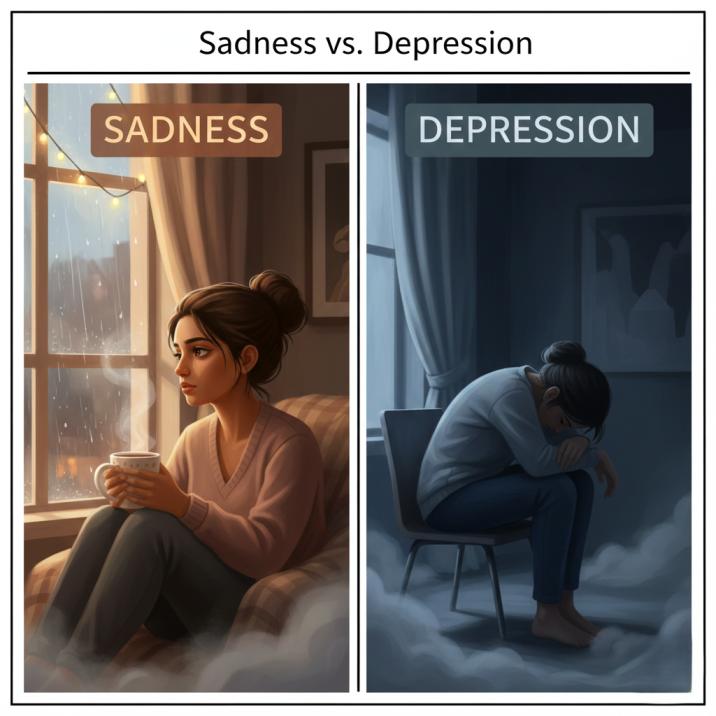
In India, we often use the word “Depression” very loosely. We say “I’m depressed” when our favorite cricket team loses or when it rains on a Sunday. But clinically, Sadness and Depression are two completely different beasts.
Confusing them is dangerous. Treating Depression like sadness is like trying to fix a broken leg with a band-aid. It won’t work, and it might make things worse.
Today, let’s clear the fog. Here is how to tell if you are just having a bad week, or if it is time to see a doctor.
1. The Trigger vs. The Fog
Sadness usually has a cause. You fought with your partner. You didn’t get the promotion. You lost a pet. In these cases, you know why you are sad. And usually, if something good happens (like a friend visits), your mood lifts for a while. Sadness comes in waves—it hits you, but then it recedes.
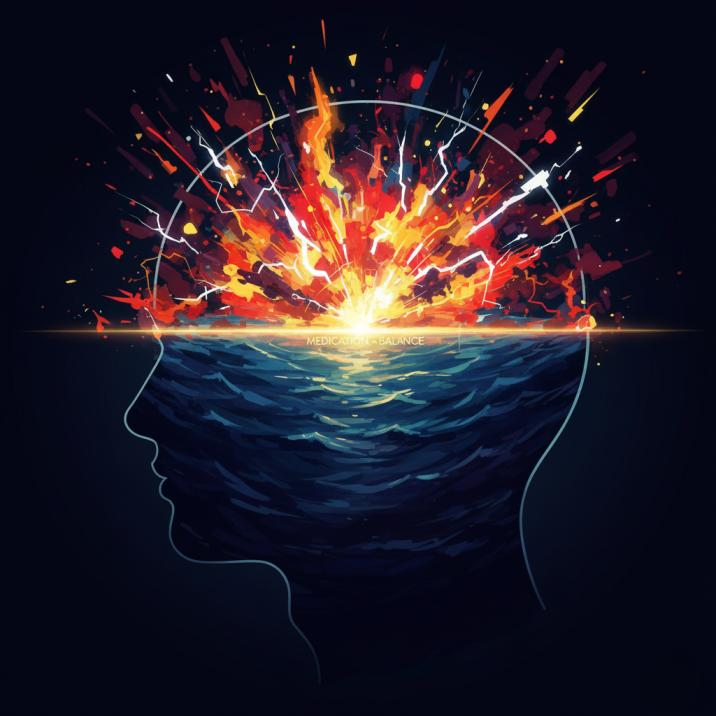
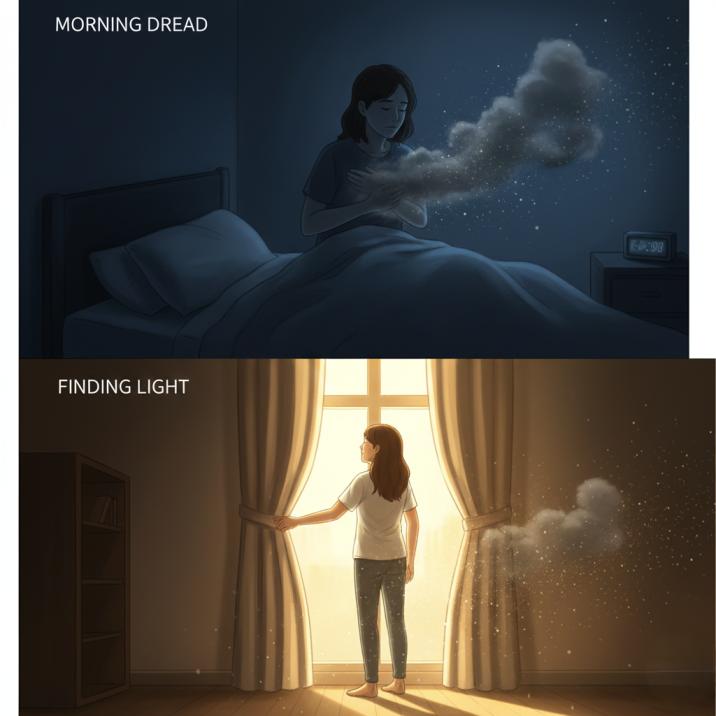
Depression often has no “reason.” Patients often tell me, “Sir, I have a good job, a loving family, and money. I have no reason to be sad. But I feel empty.” That is the hallmark of Clinical Depression. It is not a reaction to a bad event; it is a shift in your brain’s chemistry. It is like a heavy, grey fog that settles over your life and refuses to lift, no matter what happens around you.
2. The “2-Week Rule”
Psychologists use a very specific timeline. It is normal to feel low for a few days. But if you have felt empty, hopeless, or irritable for more than 2 weeks continuously, almost every day, that is a red flag. It implies that your brain’s mood-regulation system is stuck.
3. The Indian Signs: It’s Not Always Crying
In Western movies, depression looks like crying in bed. In India, depression often looks like Irritability or Body Pain.
Because we aren’t taught to express emotions, our mind pushes the pain into the body.
- The “Body” Signs: Constant back pain, headaches, heavy chest, or severe acidity that no pill fixes.
- The “Anger” Signs: Snapping at your kids, yelling at traffic, or feeling a constant, low-grade rage.
- The “Numbness”: You don’t feel sad. You feel nothing. You stare at the fan for hours. You eat food but don’t taste it.
4. The Clinical Checklist (SIGECAPS)
Doctors use a mnemonic called SIGECAPS to diagnose Major Depressive Disorder. If you have 5 or more of these, you need help.
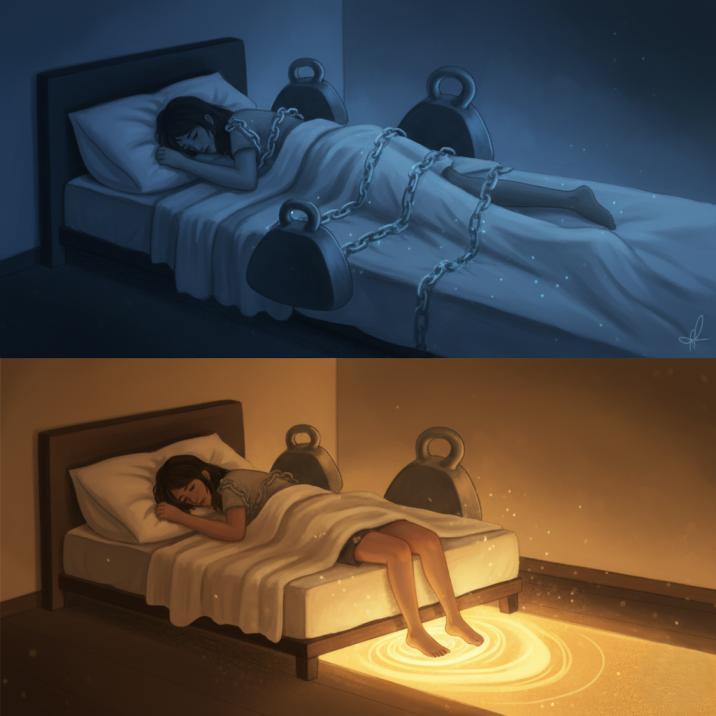
- S – Sleep: Too much (sleeping 12 hours) or too little (waking up at 3 AM).
- I – Interest: You stopped doing things you used to love. (e.g., You used to love painting, now you haven’t touched a brush in months).
- G – Guilt: Feeling worthless or thinking “I am a burden to my family.”
- E – Energy: You feel physically heavy, like you are moving through water. Taking a shower feels like a marathon.
- C – Concentration: You read the same email 5 times and still don’t understand it.
- A – Appetite: You are either overeating (comfort food) or you have zero hunger.
- P – Psychomotor: You are moving slowly or speaking slowly.
- S – Suicidal Thoughts: Thinking “The world would be better without me.”
5. The “Functionality” Test
This is the final deal-breaker. Sadness is painful, but you can still function. You can go to work, laugh at a joke, and cook dinner. Depression steals your ability to function.
- If you are calling in sick because you can’t get out of bed…
- If you haven’t brushed your teeth in 3 days…
- If your grades are crashing… Then it is a medical emergency.
What Should You Do?
If you read this and thought, “Oh god, that’s me,” please do not panic. Depression is highly treatable. You don’t have to suffer forever.
Step 1: Check Your Score (PsychKit) Don’t guess. Take the PHQ-9 (Patient Health Questionnaire). It is the same test doctors use worldwide to measure depression severity. Take the Free Depression Test
Step 2: Talk it Out (VentOut) If your symptoms are mild or you are just feeling lonely and sad, you might just need connection. Our VentOut listeners are here to hold space for you. Sometimes, just saying “I feel empty” out loud breaks the cycle. Chat with a Listener Now
Step 3: See a Specialist (IndianPsychologists) If your score is high, or if you have suicidal thoughts, you need a Clinical Psychologist. Therapy (CBT) and sometimes medication (from a Psychiatrist) can bring the light back into your life. Find a Depression Specialist
Final Reminder
Depression is a liar. It tells you that you are lazy. It tells you that you are weak. It tells you that no one cares. Do not listen to it. You are fighting a hard battle, and you deserve support. Reach out today.
📚 References & Further Reading
- National Institute of Mental Health (NIMH) – Depression: What You Need To Know.
- American Psychiatric Association – DSM-5 Criteria for Major Depressive Disorder.
- The Lancet – The burden of mental disorders in the WHO South-East Asia Region.

Author: JOYSON JOY P' MPhil (Cli. Psy.) Clinical Psychologist
Joyson Joy P is a Clinical Psychologist (RCI Licensed) and the Chief Mentor advisor of the Indian Psychologists Directory & Magazine. With a deep focus on Trauma, Anxiety, Depression, Personality disorders, and Adult ADHD, he bridges the gap between complex psychological science and the Indian cultural context. His mission is to make evidence-based mental healthcare accessible, de-stigmatized, and easy to navigate for every Indian.