Porn Addiction: The Science of Dopamine and How to Reset Your Brain
It’s a secret you keep from everyone. Maybe you promised yourself you would stop. Maybe you deleted the browser history, installed a blocker, and swore “Never again.” But three days later, when you were stressed, lonely, or bored, you were back. And afterwards? The crushing weight of shame.
In India, we don’t talk about pornography. We treat it as a moral failing or a “bad habit.” But as a psychologist, I view it differently. You are not a “bad person.” You are battling a Supernormal Stimulus.
Your brain evolved to seek sexual partners in a tribe of 50 people. Today, you have a device in your pocket that gives you access to more sexual novelty in 10 minutes than your ancestors saw in a lifetime. Your brain was not built for this.
Here is the science of why you are hooked, and how to use neuroplasticity to break free.
The Science: The “Coolidge Effect” & The Dopamine Flood
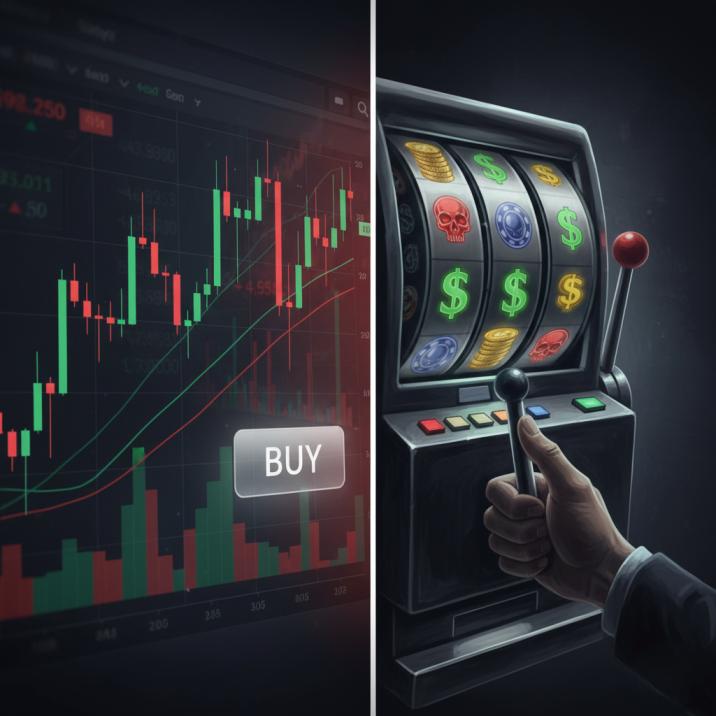
Why is porn so addictive compared to other things? It hijacks the brain’s Reward System. When you watch porn, your brain releases massive amounts of Dopamine (the molecule of craving). It is a bigger spike than food, and for some, it rivals cocaine.
But the brain creates Tolerance. If you flood the brain with dopamine every day, the brain protects itself by reducing the number of dopamine receptors. Result:
- Normal life (food, real relationships, sunsets) starts to feel “boring” or “grey.”
- You need more extreme, shocking, or taboo content just to feel the same “high.” This is called Escalation.
The Silent Symptom: PIED
The biggest motivator for men to quit isn’t morality; it’s biology. We are seeing a massive rise in Porn-Induced Erectile Dysfunction (PIED) in young men (aged 20-30). Physically, everything is fine. But the brain has been trained to be aroused only by pixels, clicking, and extreme variety. When faced with a real, slow-moving human partner, the brain says: “This isn’t enough stimulation.” The result is anxiety, loss of erection, and relationship failure.
The Good News: Neuroplasticity (The Reboot)
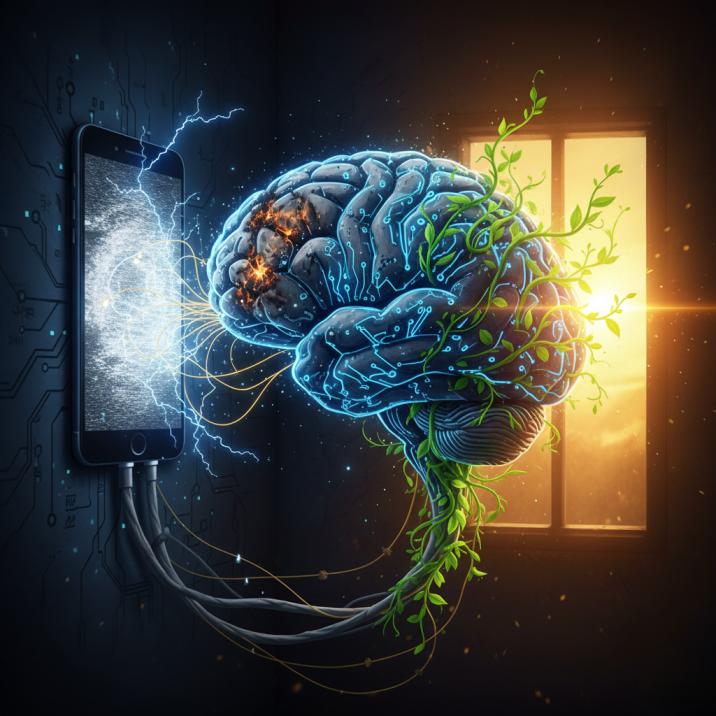
The brain is plastic. It can change. If you stop the supernormal stimulus, the brain will eventually “upregulate” your dopamine receptors. We call this The Reboot.
Phase 1: The Withdrawal (Days 1–14)
This is hell. You will feel irritable, anxious, and you might have intense cravings. Your brain is screaming for its fix.
- Strategy: You cannot use willpower alone. You need friction. Install strict blockers on all devices. Keep your door open. Do not take your phone to the bathroom.
Phase 2: The “Flatline” (Days 15–45)
This is the scary part where most people relapse. Your libido might disappear completely. You might feel depressed or “dead down there.” Do not panic. This is a sign of healing. Your brain is recalibrating its chemical baseline. It is like a muscle resting after a marathon.
Phase 3: The Reawakening (Days 45–90)
Your sensitivity returns.
- Music sounds better.
- You feel motivated to talk to real people.
- Morning erections return (a sign of physical health).
- The “fog” lifts.
How to Survive the Reboot
You need to replace the dopamine, not just remove it.
1. Urge Surfing (VentOut) Cravings are like waves. They peak and then crash. They usually last only 15-20 minutes. When the urge hits, do not fight it. Acknowledge it. Then, hop onto VentOut. Chatting with a listener distracts your prefrontal cortex just long enough for the “wave” to pass. Ride the Urge with a Listener
2. Check Your Addiction Level (PsychKit) Are you just a high-libido individual or addicted? Take the PCSI (Pornography Consumption Screening Instrument). Seeing the clinical severity can be the “wake up call” you need. Take the Screening Test
3. Sex Therapy (IndianPsychologists) If PIED is destroying your marriage or confidence, regular counseling might not be enough. You need a Sex Therapist or a psychologist specialized in addiction. They provide a shame-free space to discuss intimacy. Find a Sex/Addiction Therapist
Final Thought
Quitting porn is not about becoming a monk. It is about reclaiming your sexual energy for real life. Imagine having that energy, focus, and drive back for your career, your partner, and your passions. The pixelated screen is stealing your life force. Take it back.
📚 References & Further Reading
- Doidge, Norman – The Brain That Changes Itself (Neuroplasticity).
- Wilson, Gary – Your Brain on Porn: Internet Pornography and the Emerging Science of Addiction.
- Zimbardo, Philip – The Demise of Guys (TED Talk).

Author: JOYSON JOY P' MPhil (Cli. Psy.) Clinical Psychologist
Joyson Joy P is a Clinical Psychologist (RCI Licensed) and the Chief Mentor advisor of the Indian Psychologists Directory & Magazine. With a deep focus on Trauma, Anxiety, Depression, Personality disorders, and Adult ADHD, he bridges the gap between complex psychological science and the Indian cultural context. His mission is to make evidence-based mental healthcare accessible, de-stigmatized, and easy to navigate for every Indian.