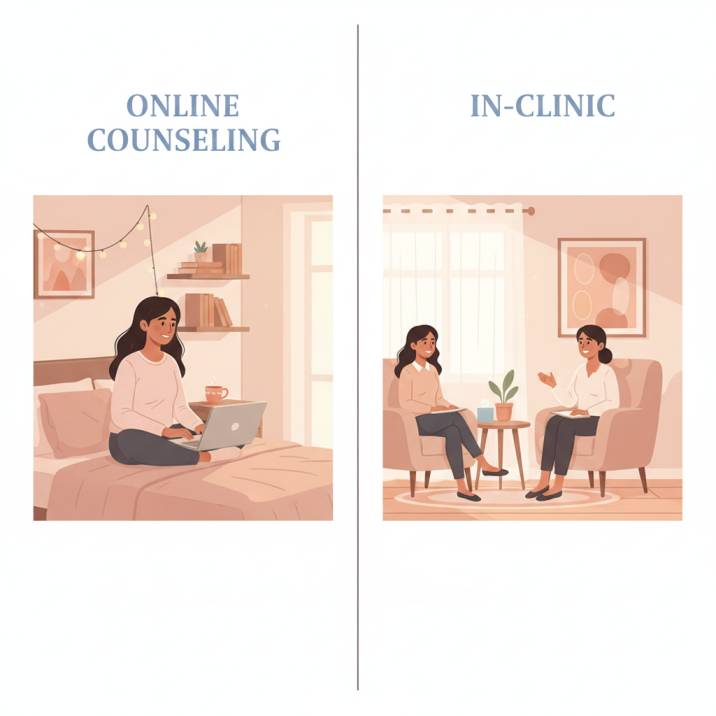
Online Counseling vs. In-Clinic: Which One is Right for You?
We live in a country where “reaching the clinic” is a battle in itself. If you are in Bangalore, Mumbai, or Delhi, a 45-minute session might cost you three hours of travel.
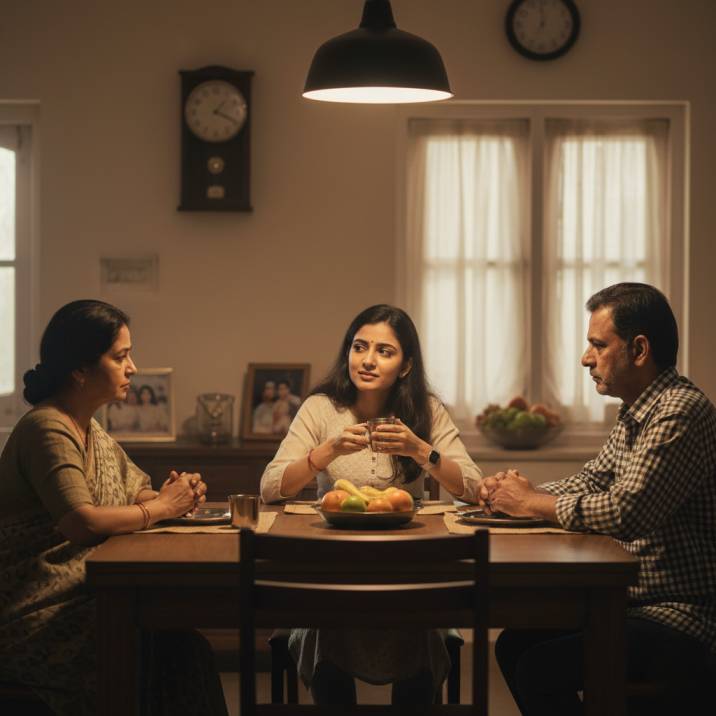
On the other hand, we also live in homes with thin walls. In a joint family, finding a quiet corner to cry without your mother-in-law asking “Kya hua?” (What happened?) is a genuine challenge.
So, the debate isn’t just about technology. It is about logistics versus privacy.
As a Clinical Psychologist, I see patients in both formats every day. Neither is “better”—they are just different tools for different needs. Let’s figure out which tool fits your life right now.
1. Online Counseling: The “Convenience” Choice
The pandemic changed everything. Suddenly, help was just a click away.
The Biggest Pros:
- Accessibility: You can talk to a top-tier psychologist in Kerala while sitting in your hostel room in Delhi. Geography is no longer a barrier.
- Anonymity: For many, walking into a clinic feels like wearing a sign that says “I have a problem.” Online, you are just a person on a screen.
- Immediate Support: Platforms like VentOut.org have revolutionized this. You don’t always need to book 3 days in advance. If you are having a panic attack at 11 PM, you can log in and find a Listener or Counsellor almost instantly.
The Cons:
- The “Home” Problem: If your WiFi drops during a breakthrough moment, it kills the flow. Also, if you don’t have a private room, you might whisper or hold back, which limits therapy.
Who is this for?
- Students or professionals with tight schedules.
- People with social anxiety who find physical clinics overwhelming.
- NRIs who want a therapist who understands Indian culture (which is hard to find in the US or UK).
2. In-Clinic Therapy: The “Container” Choice
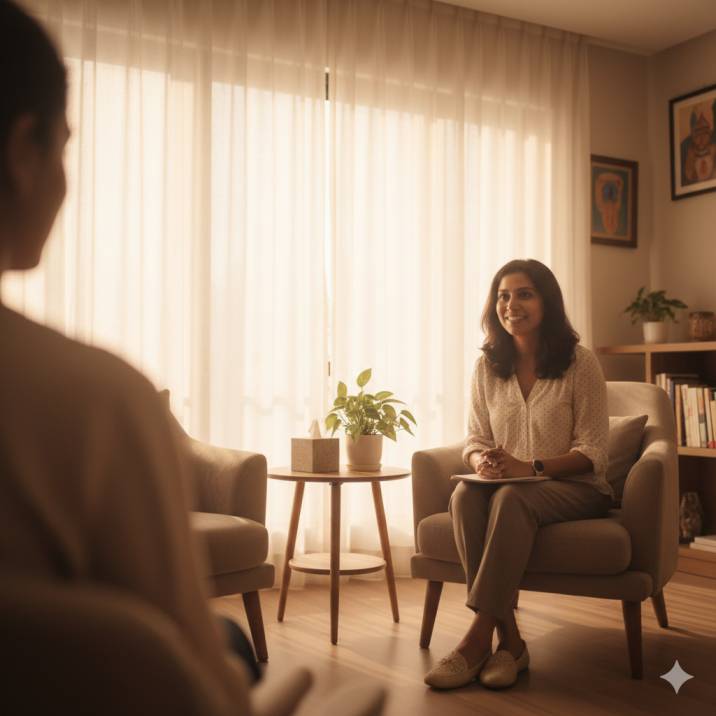
There is a magic in the physical room. We call it “The Container.” When you walk into my office, you leave your world outside.
The Biggest Pros:
- Total Focus: No phone notifications. No dog barking. It is just you and me. The silence in a therapy room is different—it’s louder.
- Body Language: A huge part of my job is reading what you don’t say. The tapping foot, the clenching jaw. I can miss these on a small Zoom window.
- Safety for Trauma: If we are doing deep trauma work (like EMDR), I prefer you to be in the room so I can ensure you are grounded and safe before you leave.
The Cons:
- Travel & Cost: It takes time. And usually, overhead costs mean in-clinic fees might be slightly higher.
Who is this for?
- People with severe depression or complex trauma.
- Couples (fighting on Zoom is messy; a neutral room helps).
- Anyone who needs a physical break from their home environment.
The Hybrid Solution: VentOut + Clinical Care
Here is the strategy I recommend to most people starting out:
Step 1: Start Online (Low Friction) If you are hesitant, don’t force yourself to go to a hospital. Start with VentOut.org.
- Connect with a Wellness Listener just to vent.
- Or book a video session with a Counselling Psychologist to dip your toes in.
- It’s affordable, private, and you can do it from your car or terrace.
Step 2: Go Offline (Deep Work) If you realize your issue is deeper—maybe you need a diagnosis or long-term management—then use IndianPsychologists.in to find a verified Clinical Psychologist near you. Many of our registered professionals offer both options, so you can meet once in person and do follow-ups online.
The Verdict?
The “best” therapy is the one you actually show up for.
- If traffic is going to make you cancel sessions, go Online.
- If your house is chaotic and unsafe, go In-Clinic.
Your mental health deserves the path of least resistance.
Ready to choose your path?
📱 I want to talk to someone RIGHT NOW (Online): Visit VentOut.org for instant chats, listeners, and online counselling. Start Chatting on VentOut
🏥 I want to see a Verified Expert In-Person: Search our directory for RCI-licensed Clinical Psychologists in your city. Find a Clinic Near Me
🧠 I’m not sure yet: Take a quick mental health test to see what kind of help you might need. Take the Free Test
📚 References & Further Reading
- American Psychological Association (APA) – Guidelines for the Practice of Telepsychology.
- Stoll, J., et al. (2020). Online Psychotherapy during COVID-19: Indian Perspectives.
- National Institute of Mental Health (NIMH) – Technology and the Future of Mental Health Treatment.

Author: JOYSON JOY P' MPhil (Cli. Psy.) Clinical Psychologist
Joyson Joy P is a Clinical Psychologist (RCI Licensed) and the Chief Mentor advisor of the Indian Psychologists Directory & Magazine. With a deep focus on Trauma, Anxiety, Depression, Personality disorders, and Adult ADHD, he bridges the gap between complex psychological science and the Indian cultural context. His mission is to make evidence-based mental healthcare accessible, de-stigmatized, and easy to navigate for every Indian.