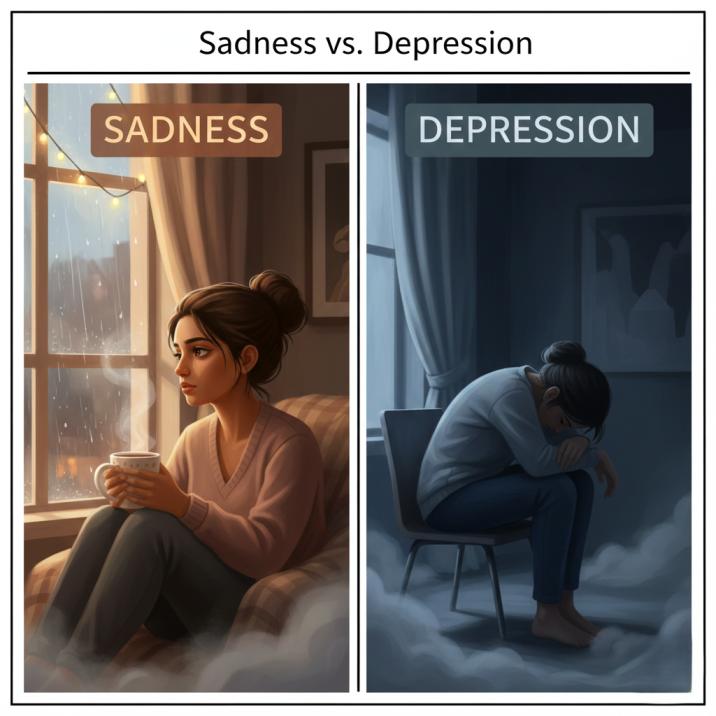
Morning Dread: Why Waking Up is the Hardest Part of the Day
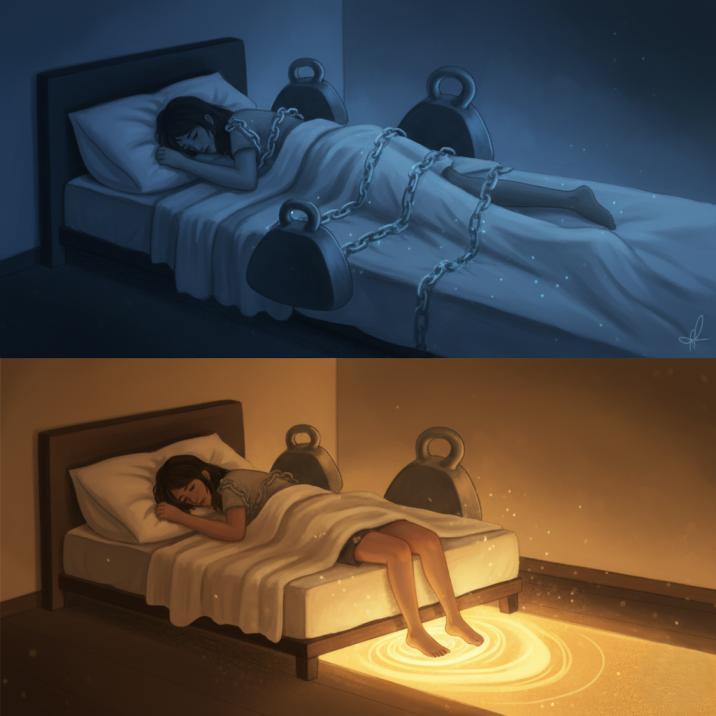
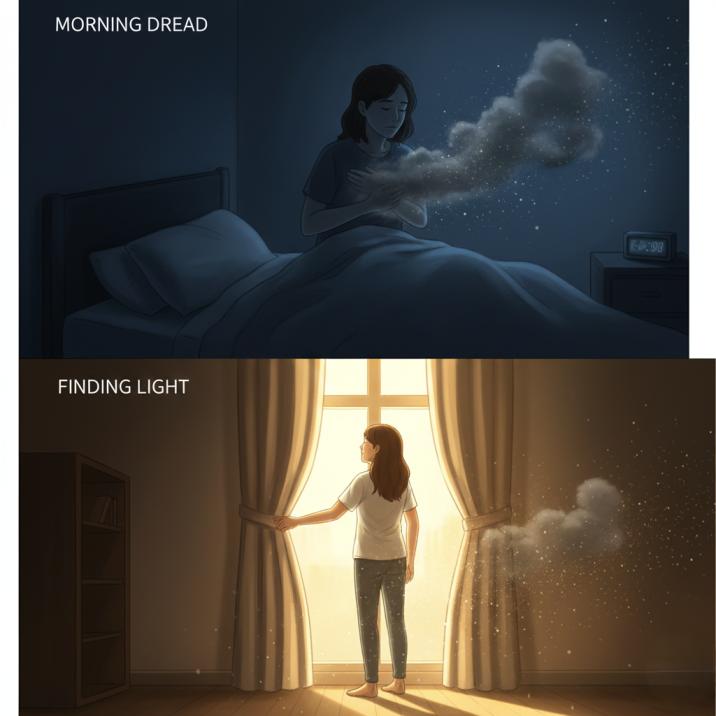
It happens the moment you open your eyes. Before you have even remembered what day it is, a heavy, cold feeling settles in your chest. Your heart starts racing. Your stomach churns. You feel a sense of impending doom, like something terrible is about to happen today.
You haven’t even brushed your teeth yet, and you are already exhausted.
In my clinic, patients often whisper this to me like it’s a secret: “Sir, the mornings are the worst. Once I get moving, I am okay. But that first hour… it feels like I am dying.”
This is Morning Dread. In Hindi, we might call it Subah ki Ghabrahat. It is one of the most common, yet least talked about, symptoms of high-functioning anxiety and depression.
Here is the good news: You aren’t “crazy.” Your body is just overreacting to the sunrise.
The Biology: The “Cortisol Spike”
Why does it happen specifically in the morning? Blame your biology.
To wake you up, your brain releases a cocktail of hormones. The main ingredient is Cortisol (the stress hormone). Think of Cortisol as your body’s natural alarm clock. It spikes about 30 minutes after you wake up to give you the energy to get out of bed. We call this the Cortisol Awakening Response (CAR).
The Glitch: In a calm person, this spike is a gentle wave. In a person with anxiety or depression, your baseline stress is already high. So when this “morning spike” hits, it floods your system. Instead of feeling “alert,” you feel “attacked.”
Your body is essentially reacting to a tiger in the room, even though the only thing in the room is your alarm clock.
The “Anticipatory” Trap
There is also a psychological layer. When you open your eyes, your brain immediately scans your schedule.
- “I have that meeting at 10.”
- “I have to deal with that difficult client.”
- “I have to face the traffic.”
If you are burnt out, your brain sees the day ahead not as an “opportunity,” but as a “threat.” The dread is your brain trying to protect you by saying, “Don’t go out there. It’s safer in bed.”
How to Hack Your Mornings (3 Steps)
You cannot stop the Cortisol spike (it’s biological), but you can stop it from turning into a panic attack.
1. The “No-Scroll” Rule (Absolute Must)
Most people wake up, feel anxious, and immediately grab their phone. This is poison. Your brain is already fragile. If you feed it news, emails, or Instagram jealousy within 5 minutes of waking up, you are pouring petrol on the fire. The Fix: Buy a real alarm clock. Keep your phone in the kitchen. Do not touch it until you have brushed your teeth. Give your brain 15 minutes of silence to stabilize.
2. Burn the Adrenaline (Move Immediately)
Morning dread is essentially trapped energy (Fight or Flight). You need to release it physically. You don’t need a gym workout.
- Do 10 jumping jacks.
- Stretch your arms up to the ceiling.
- Walk briskly to the kitchen. Movement signals to your brain: “We are moving, we are surviving, the danger is over.”
3. Light Therapy (Reset the Clock)
Open the curtains immediately. Sunlight entering your eyes triggers Serotonin (the happy hormone) and stops the production of Melatonin (the sleep hormone). It tells your biological clock, “Okay, the scary transition is over. It is day time.” Sitting in the dark only prolongs the dread.
When to Seek Help
If this dread is paralyzed you—meaning you are missing work or staying in bed until noon regularly—it might be a sign of Clinical Depression or Generalized Anxiety Disorder (GAD).
- Check Your Cortisol/Stress Levels: Is it just a bad habit or a chemical imbalance? Take a standardized anxiety test to see where you stand. Take the Free Anxiety Test
- Start the Day with Support (VentOut): If you wake up feeling lonely and scared, you don’t have to start the day alone. Our VentOut listeners are active early in the morning. A 10-minute chat can ground you before you face the world. Chat with a Morning Listener
- Clinical Treatment (IndianPsychologists): If the biological symptoms (racing heart, nausea) are severe, a Clinical Psychologist can teach you specific grounding techniques, or a Psychiatrist might prescribe medication to regulate your cortisol levels. Find an Anxiety Expert
Final Thought
The morning is just a transition. It is the bridge between the safety of sleep and the reality of the day. Bridges can be scary, but they are crossable. Be gentle with yourself in that first hour. You aren’t failing at life; you are just waking up.
📚 References & Further Reading
- Clow, A., et al. – The cortisol awakening response: more than a measure of HPA axis function.
- Huberman Lab – Tools for Managing Stress & Anxiety (Light Exposure).
- Anxiety and Depression Association of America (ADAA) – Sleep Disorders and Anxiety.

Author: JOYSON JOY P' MPhil (Cli. Psy.) Clinical Psychologist
Joyson Joy P is a Clinical Psychologist (RCI Licensed) and the Chief Mentor advisor of the Indian Psychologists Directory & Magazine. With a deep focus on Trauma, Anxiety, Depression, Personality disorders, and Adult ADHD, he bridges the gap between complex psychological science and the Indian cultural context. His mission is to make evidence-based mental healthcare accessible, de-stigmatized, and easy to navigate for every Indian.