Confidence is a Skill, Not a Trait: How to Build It From Scratch
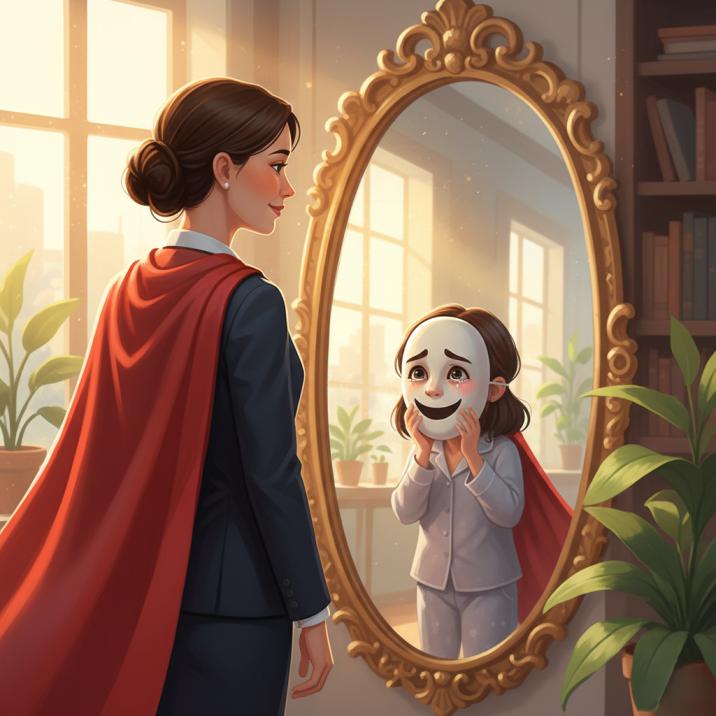
We all know that one person. They walk into a room, and they own it. They speak clearly. They aren’t afraid to disagree. They seem bulletproof.
And we look at them and think: “Wow, they are so lucky. I wish I was born like that.”
We treat confidence like it is eye color—something you are either born with or you aren’t. But as a psychologist, I am here to tell you that is a lie.
Confidence is not a Trait. It is a Skill. It is exactly like driving a car or cooking a biryani. No one is born knowing how to drive. You learn it, you practice it, you stall the engine a few times, and eventually, you do it without thinking.
If you are waiting to “feel” confident before you start that business or ask that person out, you will wait forever. Here is the blueprint to build it from scratch.
The “Confidence-Competence” Loop
Most people think the order is: Confidence -> Action -> Success. (I feel ready, so I do it).
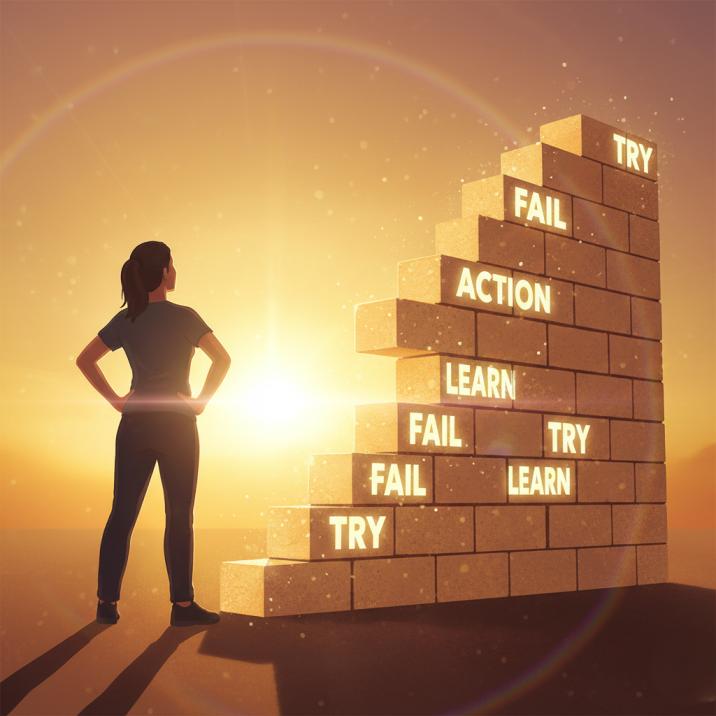
The real order is: Action -> Competence -> Confidence. (I do it scared, I get better at it, and NOW I feel ready).
Confidence is just the memory of past success. You are confident that you can tie your shoelaces because you have done it 10,000 times. You aren’t confident about public speaking because you have done it 3 times. The only way to build the feeling is to do the thing.
Step 1: Fix Your Physiology (The “Power Pose”)
Your mind listens to your body. If you sit hunched over, arms crossed, looking at the floor (the “Phone Posture”), your brain releases Cortisol (stress hormone). You literally make yourself feel smaller.
The Hack: Before a big meeting or date, go to the bathroom and do a “Power Pose” for 2 minutes.
- Stand tall.
- Hands on hips (Wonder Woman / Superman pose).
- Chin up. This physically boosts Testosterone (dominance) and lowers Cortisol. You don’t have to be confident; you just have to stand confident, and your brain will follow.
Step 2: The “Micro-Challenge” Strategy
You don’t build confidence by fighting a tiger. You build it by swatting a fly. If you have low self-esteem, your brain doesn’t trust you. You need to earn that trust back with small wins.
- Day 1: Make eye contact with a waiter when ordering.
- Day 2: Ask a question in a Zoom meeting.
- Day 3: Say “No” to a small request you don’t want to do.
Every time you survive a small risk, your brain updates its software: “Oh, we didn’t die. Maybe we are stronger than we thought.”
Step 3: Kill the “Spotlight Effect”
In India, we are terrified of “Log Kya Kahenge” (What will people say?). We think everyone is watching us, waiting for us to fail.
The Truth: People are not thinking about you. They are thinking about themselves.
- If you stutter in a presentation, they aren’t thinking “What a loser.” They are thinking “I hope lunch is soon.”
- Once you realize nobody cares, you become free. You can make mistakes because the audience is imaginary.
Where to Practice?
You need a gym for your confidence muscles.
- Practice Speaking (VentOut): If you are too shy to talk to friends, talk to a stranger first. Log onto VentOut. Practice asserting your opinion with a listener. Practice saying “I disagree.” It’s a safe sandbox where mistakes don’t matter. Practice Speaking on VentOut
- Measure Your Self-Esteem (PsychKit): Where are you starting from? Take the Rosenberg Self-Esteem Scale. It gives you a baseline score so you can track your growth over time. Take the Confidence Test
- Deep Healing (IndianPsychologists): Sometimes, low confidence comes from childhood bullying or critical parents. A Counselling Psychologist can help you heal those old wounds so you can build a new foundation. Find a Therapist for Self-Esteem
Final Thought
Confidence isn’t about knowing you will succeed. Confidence is knowing you will be okay even if you fail. It is the quiet belief that “Whatever happens, I can handle it.” And you can. You have handled everything life has thrown at you so far. You are already ready.
📚 References & Further Reading
- Cuddy, Amy – Presence: Bringing Your Boldest Self to Your Biggest Challenges.
- Dweck, Carol – Mindset: The New Psychology of Success.
- Harris, Russ – The Confidence Gap.

Author: JOYSON JOY P' MPhil (Cli. Psy.) Clinical Psychologist
Joyson Joy P is a Clinical Psychologist (RCI Licensed) and the Chief Mentor advisor of the Indian Psychologists Directory & Magazine. With a deep focus on Trauma, Anxiety, Depression, Personality disorders, and Adult ADHD, he bridges the gap between complex psychological science and the Indian cultural context. His mission is to make evidence-based mental healthcare accessible, de-stigmatized, and easy to navigate for every Indian.