Eating Disorders in the Age of Instagram: It’s About Control, Not Food
You wake up. You scroll. You see a fitness influencer drinking green juice with 0% body fat. You see a friend posting their “Pre-Workout” meal. You see a “What I Eat in a Day” reel that totals 1200 calories.
Suddenly, your toast and chai feel wrong. You feel guilty. You feel “messy.” So, you decide to skip lunch to “get back on track.”
In the last decade, the face of Eating Disorders (EDs) has changed. It is no longer just about the teenager who wants to look like a supermodel. It is now about the professional who wants to be “Perfect.” It is about the student who is obsessed with “Clean Eating.”
As a psychologist, I need you to understand one fundamental truth: Eating Disorders are rarely about food. They are about Control. And in the age of Instagram, where everything feels chaotic, controlling your plate has become the ultimate (toxic) safety blanket.
1. The “Wellness” Trap (Orthorexia)
In the 90s, the goal was “Thin.” Today, the goal is “Healthy.” But often, “Healthy” is just a disguise for restriction.
This is called Orthorexia Nervosa. Unlike Anorexia (where you restrict calories), Orthorexia is an obsession with food quality.
- You cut out sugar because it’s “poison.”
- Then you cut out gluten. Then dairy. Then carbs.
- You refuse to eat at a restaurant because you don’t know what oil they use.
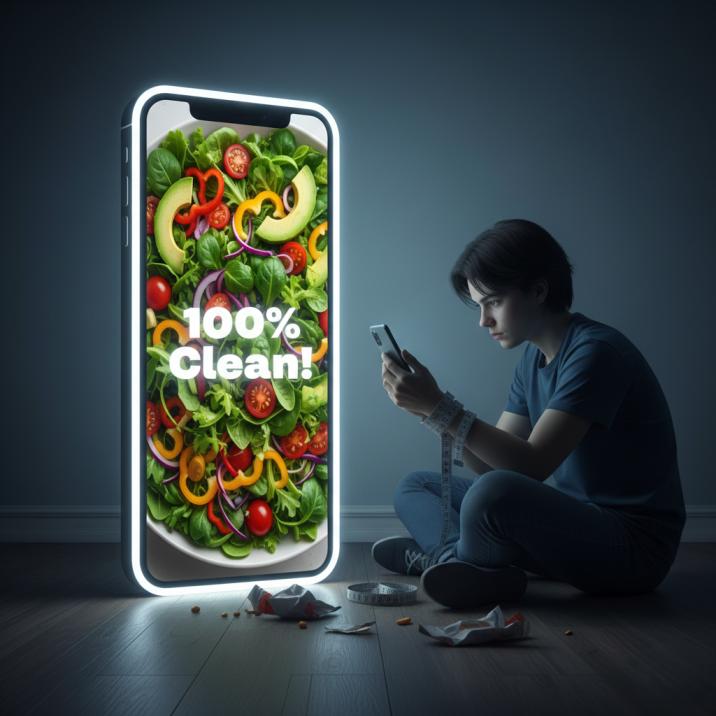
The Instagram Factor: Social media applauds this. If you post “I haven’t eaten sugar in 3 years,” you get likes. You get labeled “Disciplined.” The algorithm validates your disorder, making you feel morally superior for your restriction. But inside, you are just as trapped as someone with Anorexia.
2. Why Control? (The Psychology)
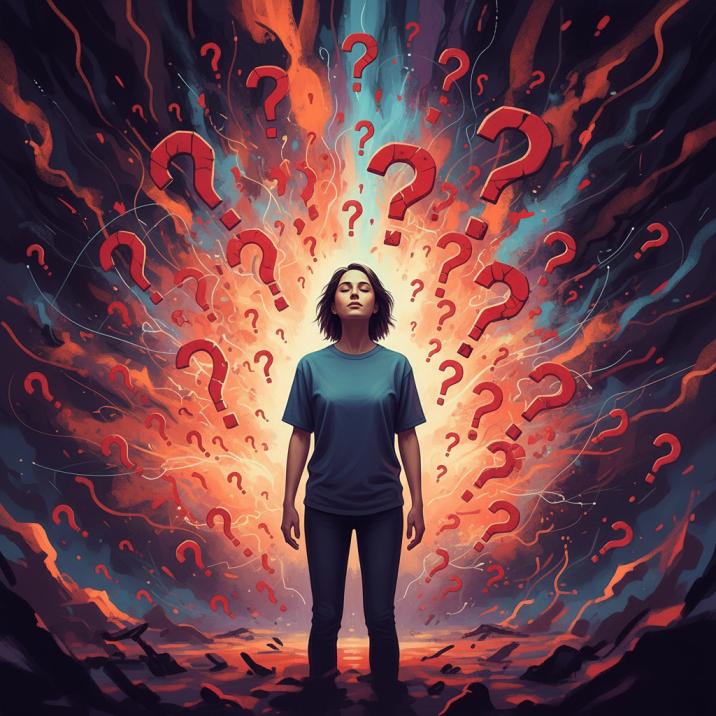
Why do we do this? Imagine your life is a storm.
- You are stressed about exams.
- Your relationship is rocky.
- You feel unsure about your career.
You cannot control the economy. You cannot control your partner. But you CAN control exactly how many grams of protein you eat.
When you weigh your food or track your macros perfectly, your brain gets a hit of safety. “See? I am in charge. I am safe.” The eating disorder is a Coping Mechanism for anxiety. It is a way to create a small, ordered world within a chaotic one.
3. The “Metric” of Self-Worth
Instagram has turned our bodies into “Content.” In the past, you only saw yourself in the mirror once or twice a day. Now, you see “ideal” bodies 500 times a day. This triggers Social Comparison Theory.
- “She is waking up at 5 AM and drinking lemon water. I woke up at 8 AM. I am lazy.”
We start using our body fat percentage or our diet adherence as a scorecard for our worth as human beings.
- Good Day: Ate “clean,” exercised. (I am a good person).
- Bad Day: Ate pizza, skipped gym. (I am a failure).
4. Signs It’s a Disorder, Not a Lifestyle
How do you know if you are just “health-conscious” or if you have a problem? Ask yourself these 3 questions:
- The “Flexibility” Test: If your friends suddenly say, “Let’s go for Pani Puri,” do you panic? Do you decline because you can’t track the calories?
- The “Guilt” Test: If you miss a workout, does it ruin your entire mood? Do you feel you have to “punish” yourself by eating less the next day?
- The “Brain Space” Test: What percentage of your day is spent thinking about food? If it’s more than 20%, it is consuming your life.
How to Reclaim Your Agency
You need to shift the control from “Restricting” to “Living.”
1. Curate Your Feed (The Purge) If an account makes you feel bad about your body, Unfollow. Period. Even if they are “motivational.” If their motivation triggers your anxiety, they have to go. Replace them with accounts that focus on hobbies, art, or comedy—anything not related to bodies.
2. Focus on Functionality, Not Aesthetics Your body is an instrument, not an ornament. Instead of thinking “Do my abs look good?”, think “Wow, my legs allowed me to walk to work today.” Gratitude for function is the antidote to obsession with form.
3. Seek Professional Support Eating disorders are the deadliest mental illness. You cannot “willpower” your way out of them.
- Screen Yourself (PsychKit): Are you at risk? Take the EAT-26 (Eating Attitudes Test). It is a standardized screening tool used by doctors to detect ED risks. Take the Eating Disorder Screening
- The Anxiety Trigger (VentOut): The urge to restrict often comes from anxiety. Next time you feel the need to skip a meal to feel “in control,” talk to a listener instead. Regulate your emotion through connection, not starvation. Talk Instead of Restricting
- Clinical Treatment (IndianPsychologists): If you are suffering from Anorexia, Bulimia, or severe Orthorexia, you need a Clinical Psychologist and a Nutritionist. Recovery is possible, but you need a team. Find an Eating Disorder Specialist
Final Thought
Food is fuel. It is culture. It is joy. It is family. It is not a moral test. You are not a “better” person because you ate a salad. You are not a “worse” person because you ate a burger. You are just a person. Be kind to yourself.
📚 References & Further Reading
- National Eating Disorders Association (NEDA) – Orthorexia Nervosa Signs & Symptoms.
- Holland, G., & Tiggemann, M. – A systematic review of the impact of the use of social networking sites on body image and disordered eating.
- Tribole, E., & Resch, E. – Intuitive Eating: A Revolutionary Anti-Diet Approach.

Author: JOYSON JOY P' MPhil (Cli. Psy.) Clinical Psychologist
Joyson Joy P is a Clinical Psychologist (RCI Licensed) and the Chief Mentor advisor of the Indian Psychologists Directory & Magazine. With a deep focus on Trauma, Anxiety, Depression, Personality disorders, and Adult ADHD, he bridges the gap between complex psychological science and the Indian cultural context. His mission is to make evidence-based mental healthcare accessible, de-stigmatized, and easy to navigate for every Indian.