Postpartum Depression in Indian Mothers: You Are Not a “Bad Mom”
Everyone told you this would be the happiest time of your life. The relatives brought ladoos. The neighbors came to see the baby. Your Instagram feed is full of photos of cute toes and smiling family members.
But inside? You feel like you are drowning.
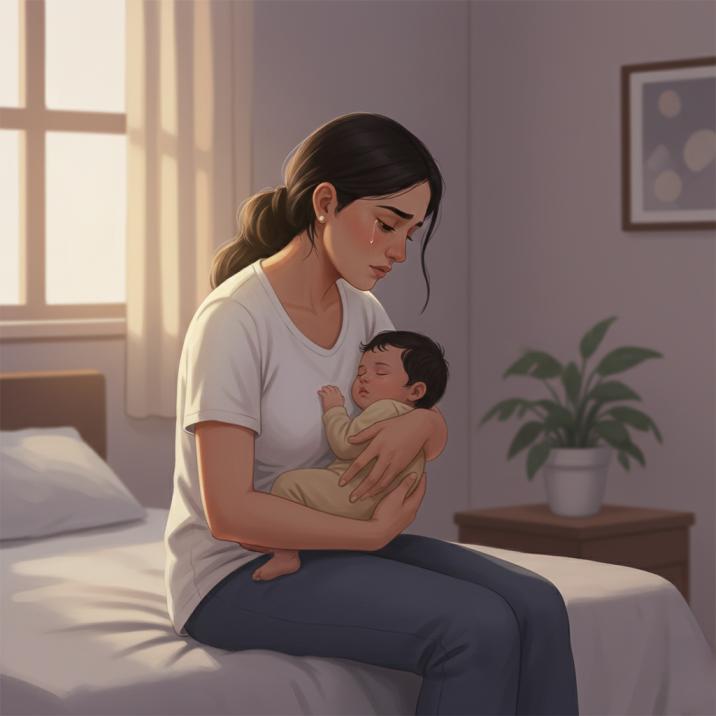
You look at your baby, and instead of a rush of love, you feel… numbness. Or worse, irritation. You cry in the shower. You lie awake at night, terrified that you might accidentally hurt the baby. And then the voice in your head screams: “What is wrong with you? You are a terrible mother. You don’t deserve this child.”
If you are reading this through tears at 3 AM while nursing, please listen to me: You are not a bad mother. You are ill.
Postpartum Depression (PPD) affects 1 in 5 Indian mothers. It is not a character flaw. It is a medical storm caused by hormones, sleep deprivation, and societal pressure. Let’s talk about how to survive it.
The “Baby Blues” vs. PPD: Know the Difference
First, let’s check if this is temporary or clinical.
The Baby Blues (Normal)
- Timeline: Starts 2-3 days after birth, lasts up to 2 weeks.
- Symptoms: Mood swings, crying spells, anxiety.
- Cause: The sudden drop in estrogen and progesterone after delivery.
- Verdict: It goes away on its own with rest.
Postpartum Depression (PPD)
- Timeline: Can start anytime in the first year. Lasts for months if untreated.
- Symptoms: Deep sadness, lack of interest in the baby, guilt, rage, thoughts of self-harm.
- Verdict: This requires treatment. It will not just “pass.”
The Indian Pressure Cooker
In the West, PPD is often about isolation. In India, it is often about Interference. You are recovering from major surgery (C-section or natural), bleeding, and sleepless. Yet, you are surrounded by people.
- The Advice Overload: “Don’t eat that!” “Why is the baby crying? Your milk must be thin.” “Massage the baby like this.”
- The Gender Disappointment: In some families, the pressure to have a boy adds a devastating layer of guilt and rejection if you have a girl.
- The “Supermom” Myth: You are expected to breastfeed perfectly, lose the baby weight instantly, and host guests—all with a smile.
This constant scrutiny makes you feel like you are failing every single minute.
The Scary Thoughts (Intrusive Thoughts)
This is the symptom no one talks about because it is terrifying. You might be holding the baby and suddenly think: “What if I drop him?” or “What if I throw her?”
You recoil in horror. You think, “I’m a monster.” Clinical Fact: You are not a monster. These are Intrusive Thoughts. They are a symptom of high anxiety. The fact that you are horrified by them proves you love your baby and want to keep them safe.
How to Heal (For You and Your Baby)
A happy mother is the best gift you can give your child. Not a perfect mother. A happy one.
1. Break the Silence (VentOut) The biggest enemy of PPD is shame. You feel you can’t tell your husband or mother-in-law because they will judge you.
- Action: Talk to us. Our VentOut listeners are strangers. You can say, “I hate breastfeeding” or “I miss my old life” without anyone calling you selfish. Letting the poison out is the first step to feeling lighter. Talk Safely to a Listener
2. Check Your Severity (PsychKit) Are you just exhausted or is it severe PPD?
- Action: Take the Edinburgh Postnatal Depression Scale (EPDS). It is the global standard for screening new moms. Show the score to your doctor. Take the Postpartum Test
3. Get Professional Help (IndianPsychologists) If you are unable to function or have thoughts of harming yourself, you need a Clinical Psychologist.
- Action: Therapy provides a judgment-free space to process your new identity. Sometimes, medication is needed (and yes, there are breastfeeding-safe antidepressants). Find a Perinatal Mental Health Expert
A Note to the Husband and Family
If you are reading this for your wife/daughter:
- Don’t say: “Look at the baby, be happy.”
- Do say: “You are doing a great job. Go sleep for 4 hours. I will handle the baby.” Sleep is the number one medicine she needs right now. Protect her rest like a warrior.
Final Thought
You are growing a human, feeding a human, and keeping a human alive. It is the hardest job on the planet. It is okay to not love every minute of it. It is okay to ask for help. You will get through this, and one day, you will genuinely smile at your baby again.
📚 References & Further Reading
- Upadhyay, R. P., et al. – Postpartum depression in India: A systematic review and meta-analysis (Bulletin of the World Health Organization).
- American Psychological Association (APA) – Postpartum Depression Facts.
- National Institute of Mental Health (NIMH) – Perinatal Depression.

Author: JOYSON JOY P' MPhil (Cli. Psy.) Clinical Psychologist
Joyson Joy P is a Clinical Psychologist (RCI Licensed) and the Chief Mentor advisor of the Indian Psychologists Directory & Magazine. With a deep focus on Trauma, Anxiety, Depression, Personality disorders, and Adult ADHD, he bridges the gap between complex psychological science and the Indian cultural context. His mission is to make evidence-based mental healthcare accessible, de-stigmatized, and easy to navigate for every Indian.