“I Don’t Feel Like Doing Anything”: Overcoming the Paralysis of Depression
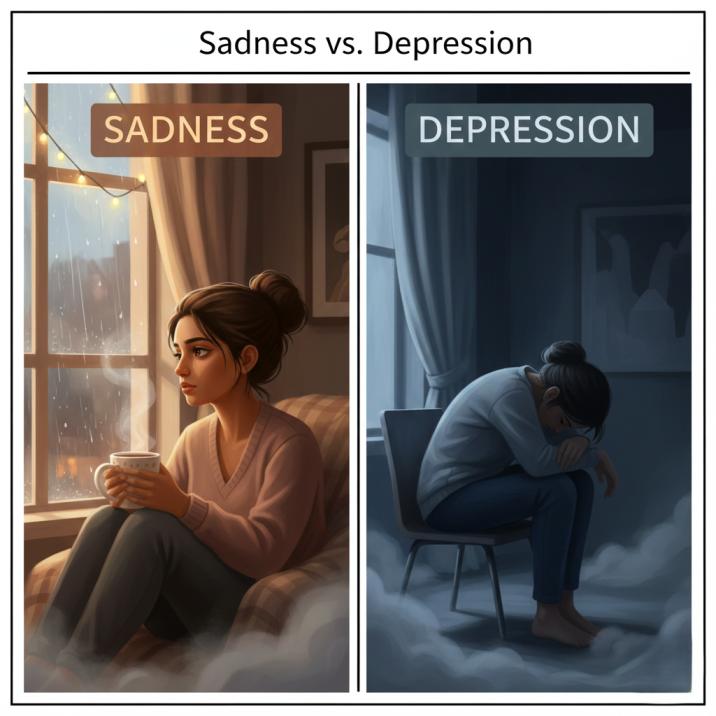
You wake up. You stare at the ceiling. You know you need to brush your teeth. You know you need to check your email. You know you should eat.
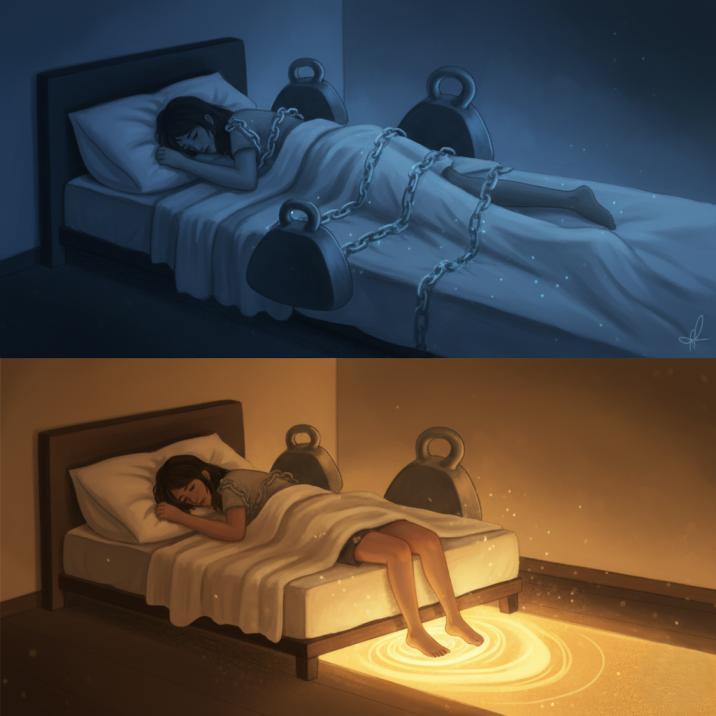
But your body feels like it weighs 500 kilograms. The walk to the bathroom feels as impossible as climbing the Himalayas. So you roll over, pull the blanket up, and close your eyes again.
And then the guilt hits. “I am so lazy.” “Why am I wasting my life?” “Everyone else is working, and I am just lying here.”
In India, where we are often called “Aalsi” (lazy) or “Kaamchor” (shirker) if we aren’t constantly productive, this feeling is shameful.
But as a Clinical Psychologist, I want to absolve you of that shame right now. This is not Laziness. This is Executive Dysfunction. It is a biological symptom of depression where the brain’s “starter motor” is broken.
Today, let’s talk about how to hot-wire that motor.
The Science: Why You Can’t Move
To do any task (even washing a spoon), your brain needs a chemical called Dopamine. It is the fuel that says, “Do this, and you will feel good.”
In depression, your dopamine levels tank. Your brain looks at the task (washing the spoon) and predicts: “There is no reward for this. It’s just effort.” So it refuses to send the signal to your muscles.
You aren’t “choosing” to stay in bed. Your brain is essentially on strike.
The “Motivation Trap” (The Biggest Lie)
Most people wait for motivation to strike. They think: “Once I feel better, I will start exercising.” “Once I have energy, I will clean my room.”
Here is the clinical truth: Motivation does not come before action. Motivation comes after action.
If you wait until you “feel like it,” you will wait forever. You have to do the action while you feel terrible, and then the motivation will show up to keep you going. We call this Behavioral Activation.
How to Trick Your Brain (3 Tiny Steps)
We aren’t going to aim for “Cleaning the house.” That is too big. We need to aim stupidly small.
1. The “5-Minute Rule”
Tell yourself: “I don’t have to finish the task. I just have to do it for 5 minutes. If I want to stop after 5 minutes, I am allowed to.”
- The Task: Washing dishes.
- The Deal: Wash two plates. If you hate it, stop.
- The Result: Usually, the hardest part is starting. Once your hands are wet, your brain says, “Okay, we are already here, might as well finish.”
2. “Something is Better Than Nothing”
Depression loves perfectionism. “If I can’t take a full shower, why bother?” Smash that thinking.
- Can’t shower? Wash your face.
- Can’t brush your teeth for 2 minutes? Brush for 10 seconds.
- Can’t go to the gym? Walk to the gate and back.
Doing a “bad” job is infinitely better than doing nothing. It keeps the rust off your gears.
3. The “Opposite Action” Technique
This is a skill from DBT (Dialectical Behavior Therapy). When your depression urges you to stay in bed, do the exact Opposite Action.
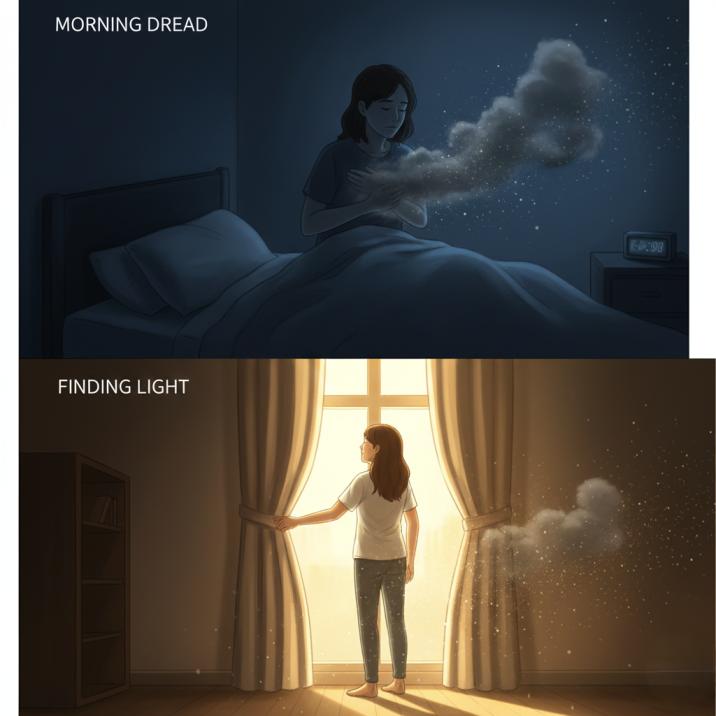
- Urge: Stay in the dark.
- Action: Open one curtain.
- Urge: Isolate and switch off the phone.
- Action: Send one emoji to a friend.
You don’t have to want to do it. You just have to move your limbs like a robot. The feelings will catch up later.
You Need an Accountability Buddy
Fighting paralysis alone is hard because your brain will always talk you out of it. You need an external voice.
- The “Nudge” (VentOut): If you are stuck in bed right now, log onto VentOut. Tell a listener: “I am stuck. Can you just encourage me to stand up?” Sometimes, just knowing a real human is waiting for you to reply is enough to break the spell. Get a Motivation Nudge on VentOut
- Track Your Small Wins (PsychKit): Use a simple mood tracker. Log every small thing you did (e.g., “Drank water,” “Made bed”). Seeing a streak of small wins releases a tiny bit of dopamine, which fuels the next action. Use the Free Mood Tracker
- Clinical Help (IndianPsychologists): If you have been unable to work or leave the house for weeks, you might need medication to help kickstart your dopamine levels along with therapy. Find a specialist who understands Mood Disorders. Find a Depression Expert
Final Thought
Please be gentle with yourself. You are recovering from an illness, not a vacation. If all you did today was breathe and survive, that is enough. Tomorrow, we will try to wash one spoon. And that will be a victory.
📚 References & Further Reading
- Martell, C. R., et al. – Behavioral Activation for Depression: A Clinician’s Guide.
- Korb, Alex – The Upward Spiral: Using Neuroscience to Reverse the Course of Depression.
- American Psychological Association (APA) – Overcoming the inertia of depression.

Author: JOYSON JOY P' MPhil (Cli. Psy.) Clinical Psychologist
Joyson Joy P is a Clinical Psychologist (RCI Licensed) and the Chief Mentor advisor of the Indian Psychologists Directory & Magazine. With a deep focus on Trauma, Anxiety, Depression, Personality disorders, and Adult ADHD, he bridges the gap between complex psychological science and the Indian cultural context. His mission is to make evidence-based mental healthcare accessible, de-stigmatized, and easy to navigate for every Indian.